
How a Modern EFB Reduces Cockpit Workload
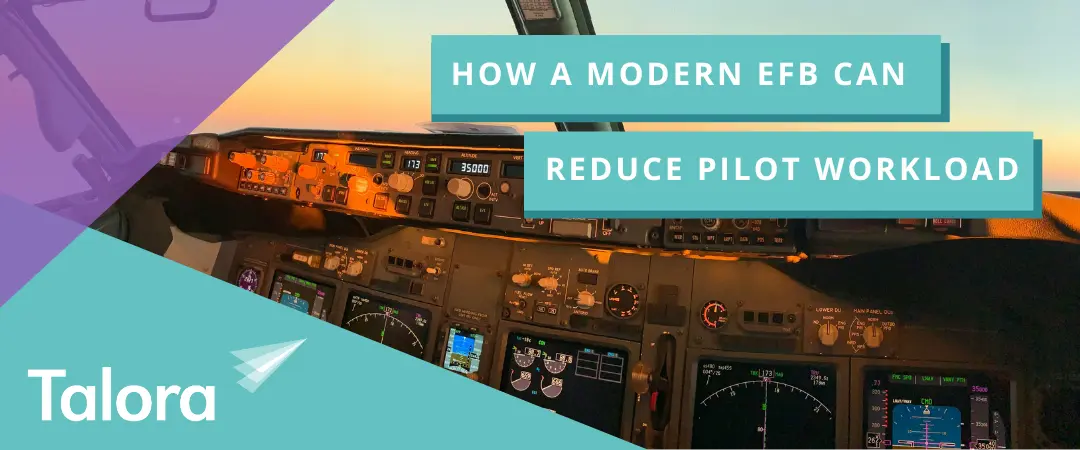
An Electronic Flight Bag has evolved from a digital document repository into a central operational platform within modern flight operations. A contemporary EFB environment combines navigation data, operational procedures, flight documentation, performance calculations, and connected operational services into a structured and controlled workflow. The strategic objective is not limited to replacing paper in the cockpit. It focuses on reducing Cockpit Workload, improving information accessibility, supporting standardized operational processes, and enabling audit-ready governance across airlines and aviation operators.
Further Articles in This Pillar Series
Why an EFB Helps You Reducing Costs
The operational relevance of an Electronic Flight Bag extends far beyond the cockpit. Modern EFB ecosystems affect pilots, dispatchers, Flight Operations departments, EFB administrators, compliance managers, cabin operations, and IT governance teams simultaneously. As operational environments become increasingly data-driven, the ability to provide accurate and synchronized information across all operational stakeholders has become a critical requirement.
For airlines and operators, reducing Pilot Workload is no longer solely a usability topic. It has become an operational safety, compliance, and efficiency consideration. Flight crews are required to process growing amounts of operational information within increasingly compressed turnaround windows. Simultaneously, regulatory frameworks continue to emphasize traceability, procedural consistency, data integrity, and controlled operational change management.
From a management perspective, the role of a modern Electronic Flight Bag is closely connected to operational resilience. Delayed updates, fragmented data sources, manual chart handling, disconnected flight documentation, or inconsistent operational communication can introduce operational risk and increase workload during critical flight phases.
Passenger expectations and operational reliability targets also contribute to this development. Airlines are expected to operate with greater punctuality, transparency, and procedural consistency while maintaining high safety standards. This creates additional pressure on operational departments to simplify workflows without reducing regulatory control.
At the same time, the expansion of EFB API’s and connected operational systems has shifted the focus from isolated cockpit tools toward integrated operational ecosystems. Modern EFB platforms increasingly function as operational coordination layers between dispatch systems, navigation providers, maintenance environments, document management systems, and crew communication channels.
How Talora as a Next-Generation EFB Solution Can Reduce Pilot Workload
Talora approaches Cockpit Workload reduction through structured information management and workflow simplification rather than through isolated feature expansion. The core principle behind a next-generation Electronic Flight Bag is the reduction of unnecessary operational friction during pre-flight, in-flight, and post-flight processes.
A major contributor to Pilot Workload is the fragmentation of operational information across multiple systems and disconnected interfaces. Pilots frequently need to switch between charts, operational manuals, weather information, flight plans, NOTAMs, performance tools, and operational messages within limited timeframes. Talora addresses this challenge by consolidating operationally relevant information into a unified and role-oriented environment.
Another important principle is contextual information delivery. Instead of exposing crews to large quantities of unstructured operational data, a modern EFB environment prioritizes relevance, synchronization, and procedural alignment. This reduces the cognitive effort required to locate, validate, and interpret information during time-critical operational phases.
Talora also supports workload reduction through structured EFB API integrations. Connected workflows between dispatch systems, navigation databases, operational communication channels, and documentation environments reduce manual data transfers and repetitive operational tasks. The objective is not to automate pilot decision-making, but to reduce administrative and procedural overhead around operational decisions.
From a regulatory perspective, Electronic Flight Bag environments remain subject to operational approval frameworks defined by authorities such as EASA, FAA, and ICAO guidance material. Current operational practices continue to emphasize controlled document management, software governance, version control, cybersecurity considerations, and procedural accountability.
At the same time, modern EFB solutions intentionally leave operational authority with the operator. Regulatory frameworks define requirements for compliance, operational suitability, and procedural control, while airlines maintain responsibility for operational configuration, crew procedures, approval workflows, and internal governance structures.
Why Organizations Focus on Reducing Pilot Workload
Several external developments are increasing the operational importance of reducing Pilot Workload. Flight operations have become more data-intensive, operational turnaround times remain compressed, and disruption management requires faster coordination between operational departments. Regulatory expectations are also evolving. Authorities increasingly expect operators to demonstrate controlled operational data management, structured software governance, and reliable operational communication processes. This creates additional complexity if workflows remain heavily manual or fragmented across multiple operational systems.
Another external factor is the increasing dependency on real-time operational information. Weather updates, operational restrictions, airspace changes, and revised performance calculations often require rapid operational assessment. Without integrated Electronic Flight Bag workflows, crews may spend significant time validating information across disconnected systems.
Internal operational drivers are equally important. Airlines aim to reduce procedural inconsistencies, simplify operational training, and improve standardization across fleets and crew groups. Manual document handling, uncontrolled data distribution, and isolated workflow structures often increase operational variability.
Operational fatigue management also contributes to this topic. Reducing unnecessary administrative workload allows flight crews to focus more effectively on operational priorities, situational awareness, and procedural execution. From an organizational perspective, reducing Cockpit Workload is therefore connected not only to crew efficiency, but also to operational governance, auditability, safety management, and operational continuity.
Talora’s UI Simplifies and Accelerates Operational Workflows
The structure of a modern Electronic Flight Bag environment depends heavily on usability, workflow logic, and information prioritization. Talora’s interface design focuses on reducing navigation complexity while maintaining operational transparency and procedural consistency.
Central operational components typically include:
- Digital aeronautical charts
- Flight documentation management
- Operational manuals
- NOTAM and weather integration
- Performance calculation environments
- Crew communication interfaces
- Dispatch synchronization
- EFB API connectivity layers
Different operational roles interact with the system in different ways. Pilots primarily require rapid access to operationally relevant flight information and procedural material. Dispatchers focus on synchronization between operational planning and flight execution. EFB administrators manage data governance, software distribution, device compliance, and update control processes. Operational documentation remains a key component within the workflow structure. Relevant artifacts often include:
- Minimum Equipment Lists (MEL)
- Operational Flight Plans (OFP)
- Navigation databases
- Airport briefings
- Electronic manuals
- Compliance records
- Revision tracking documentation
- Operational bulletins
An important aspect of workload reduction is interface consistency. Pilots should not need to relearn navigation logic across multiple operational modules. Standardized workflow behavior reduces interaction time and supports procedural reliability during high-workload operational phases. Talora also emphasizes structured information hierarchy. Operationally critical information is prioritized visually and contextually, helping reduce excessive navigation steps and minimizing the likelihood of information omission.
10 Steps to Implementing Pilot Workload Reduction
Assess Existing Operational Workflows
Organizations first need to identify where operational friction currently exists within cockpit and dispatch workflows. This includes document handling processes, information retrieval delays, redundant manual tasks, and disconnected operational systems. Audit trails and workflow mapping help identify procedural inefficiencies objectively. A structured assessment also supports regulatory traceability during implementation reviews.
Define Governance Responsibilities
Clear ownership is essential for Electronic Flight Bag governance. Operators should define responsibilities for EFB administration, operational approvals, data validation, cybersecurity oversight, and software lifecycle management. Without clearly assigned ownership, operational inconsistencies may emerge across departments. Governance structures should align with both operational and compliance requirements.
Standardize Operational Data Sources
A modern EFB environment depends on controlled and validated operational data. Operators should define authoritative sources for navigation charts, manuals, operational bulletins, and flight documentation. Standardization reduces the risk of conflicting operational information. It also simplifies revision management and audit preparation.
Establish Controlled API Integrations
EFB API’s should be introduced through controlled operational interfaces rather than uncontrolled system expansion. Integration logic must define how data is synchronized, validated, and distributed across operational systems. API governance should include version control, fallback procedures, and access management. This reduces operational dependency risks and improves data reliability.
Simplify User Interface Structures
Reducing Cockpit Workload requires careful interface design. Operational workflows should minimize unnecessary navigation layers and repetitive user actions. Interface consistency across modules helps reduce training complexity and operational confusion. Simplicity in operational workflows often improves both efficiency and procedural compliance.
Implement Revision and Version Control Processes
Electronic Flight Bag environments require structured update procedures. Operators should define how chart revisions, software updates, operational notices, and document changes are validated and distributed. Controlled revision workflows improve operational consistency and simplify compliance verification. Audit readiness depends heavily on traceable update management.
Train Operational Stakeholders Consistently
Training programs should cover not only technical usage, but also operational governance principles and procedural responsibilities. Pilots, dispatchers, EFB administrators, and operational managers require role-specific training structures. Consistent training reduces operational variability and supports procedural standardization. Refresher training should be aligned with operational change cycles.
Monitor Operational Usage Patterns
Organizations should continuously evaluate how Electronic Flight Bag workflows are used operationally. Monitoring helps identify bottlenecks, unnecessary interaction steps, and recurring procedural issues. Usage analysis also supports future interface improvements and operational optimization initiatives. Continuous monitoring strengthens long-term governance maturity.
Integrate Safety and Risk Management Processes
Pilot Workload reduction initiatives should be connected directly to operational safety management structures. Risk assessments should evaluate how workflow changes affect situational awareness, operational communication, and procedural reliability. Integration with Safety Management Systems (SMS) improves governance consistency. Operational changes should remain traceable and reviewable.
Maintain Continuous Regulatory Alignment
Electronic Flight Bag environments operate within evolving regulatory expectations. Operators should continuously review EASA, FAA, ICAO, and internal compliance requirements. Regulatory alignment includes cybersecurity considerations, operational suitability assessments, and software governance controls. Continuous review reduces compliance gaps and improves operational resilience.
What Advantages Does Talora Offer as an EFB System?
A modern Electronic Flight Bag environment provides operational advantages across multiple operational layers when implemented with structured governance and workflow consistency. One of the most visible benefits is the reduction of physical paper dependency and associated document management complexity. Airlines can simplify revision handling, reduce manual distribution efforts, and improve document accessibility across operational departments.
Another important advantage is real-time access to synchronized operational information. Integrated workflows allow crews and operational teams to work with consistent and current datasets across charts, weather information, manuals, and dispatch environments. This reduces information gaps and supports operational coordination.
Modern EFB API integrations also contribute to operational continuity. Structured synchronization between operational systems reduces repetitive manual tasks and minimizes data duplication across workflows. Operational efficiency improves when crews spend less time searching for information, validating document versions, or switching between disconnected systems. Reduced Cockpit Workload allows greater operational focus during time-sensitive flight phases.
From a safety perspective, workflow consistency and controlled operational information management help reduce procedural deviations and support situational awareness. Standardized operational environments also simplify training and operational oversight. Additionally, centralized governance structures improve audit readiness. Controlled version management, traceable operational changes, and documented approval workflows support compliance verification and operational transparency.
How Talora Supports the Reduction of Pilot Workload
Manual operational workflows often create hidden complexity within flight operations. Crews may need to reconcile information across multiple applications, verify document versions manually, or transfer operational data between disconnected systems. Over time, these fragmented processes increase administrative overhead and operational inconsistency. Talora addresses these challenges through structured operational integration rather than through isolated automation features. The platform provides a centralized environment for operational documentation, navigation data, communication workflows, and connected operational services.
A key contribution of Talora lies in workflow standardization. Standardized operational structures reduce variability across fleets, departments, and operational scenarios. This supports procedural consistency while maintaining operator-specific flexibility. Talora also supports structured data governance through controlled synchronization processes and integrated EFB API management. Operational data flows can be monitored, validated, and managed within clearly defined governance structures. Another important aspect is operational transparency. Controlled revision handling, synchronized operational updates, and centralized audit records help organizations maintain visibility across operational processes without increasing administrative complexity.
The platform does not replace operational responsibility or decision-making authority. Instead, it supports operational teams by reducing unnecessary workflow fragmentation and improving information accessibility within regulated operational environments.
Frequently Asked Questions
An Electronic Flight Bag is a digital operational platform used in aviation to manage flight-related information, operational documentation, navigation charts, and connected operational workflows in a structured environment
EFB API’s enable structured communication between operational systems such as dispatch platforms, chart providers, document management systems, and operational communication tools.
Yes. Electronic Flight Bag environments operate under regulatory guidance and operational approval frameworks defined by authorities such as EASA, FAA, and ICAO.
Modern EFB platforms improve operational safety by supporting standardized workflows, synchronized operational information, reduced procedural ambiguity, and improved situational awareness.
Version control is critical for compliance, audit readiness, operational consistency, and controlled distribution of operational documentation and navigation data.
Governance ensures that operational data, software updates, user access, revisions, and workflow changes remain controlled, traceable, and compliant with regulatory expectations.
An Electronic Flight Bag reduces Cockpit Workload by centralizing operational information, minimizing manual processes, simplifying workflow navigation, and improving access to synchronized operational data.
Pilots, Flight Operations departments, dispatchers, EFB administrators, compliance managers, cabin operations teams, and IT governance units can all benefit from integrated Electronic Flight Bag environments.
Common risks include inconsistent document versions, delayed operational updates, fragmented information sources, manual data duplication, and limited audit traceability.
Interface design directly affects how quickly operational information can be accessed and interpreted. Consistent and simplified UI structures reduce unnecessary interaction complexity during operational tasks.
Not entirely. While many workflows can be digitized and simplified, operational responsibility, procedural oversight, and regulatory compliance remain under the control of the operator and flight crew.
Talora supports operational standardization through centralized workflow management, controlled operational integrations, synchronized information delivery, and structured governance processes across operational departments.

written by Nico Müller-Lankow
Product Marketing Manager Aviation | LinkedIn
Published on: May 11, 2026